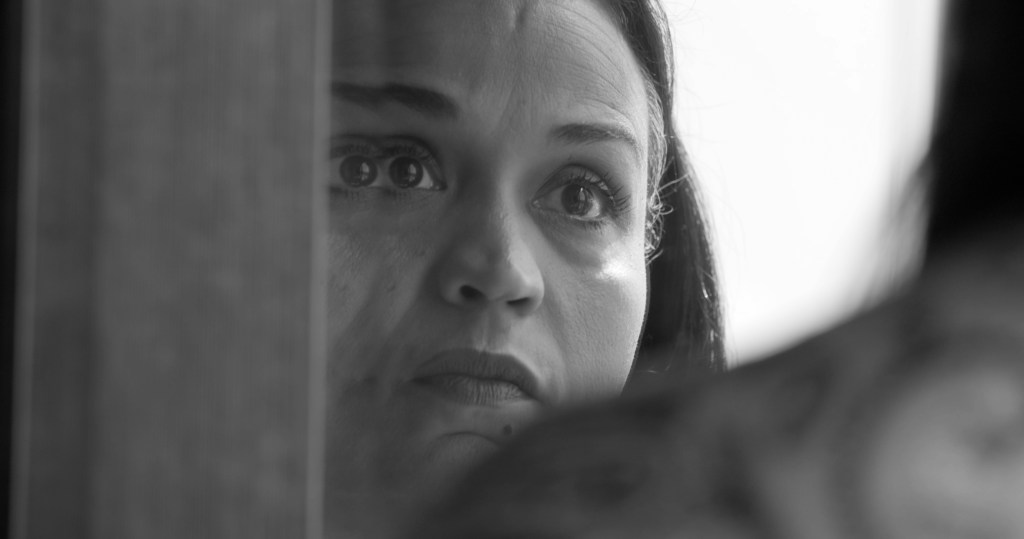
Once in a while a film comes along where the filmmaker has made every right choice. As I was watching Garrett Bradley’s Time I kept nodding my head. Of course black and white was the right choice to tell the story merging archival footage with new footage. Of course you plunge the audience into the story without talking heads or time markations. And most of all of course that’s how you end to achieve catharsis.
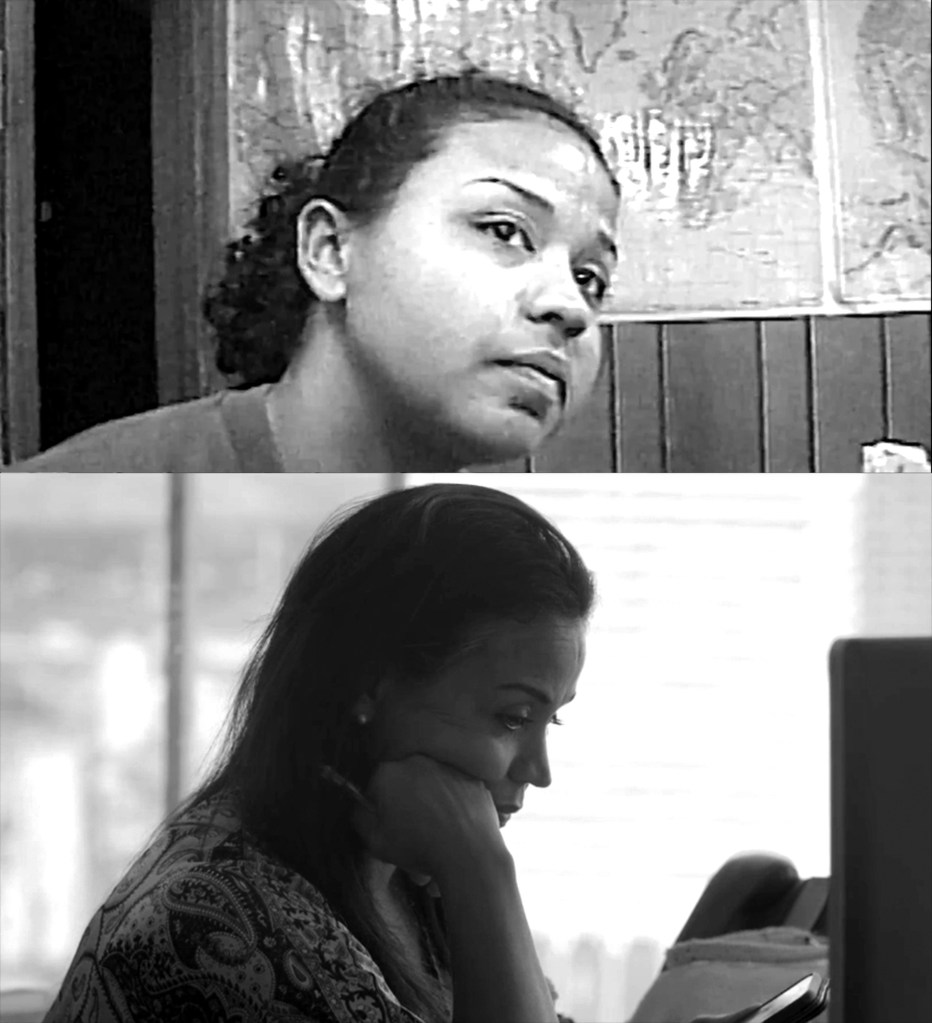
Let’s back up a little, I’m getting ahead of myself. A chronicle of the life of Fox Rich, an activist and mother of six boys, Time tells the story of a family and the grave injustice of a broken system. Rich’s husband Rob is serving a 60 year sentence for a robbery they both committed in the 1990s. She got out after serving more than 3 years and for the last 20 year has been trying to get him out while raising their family. At the same time she’s been documenting her life and her kids’ for Rob.
Bradley seamlessly integrates Rich’s video diaries with what she shot of her 19 years after the robbery. We are never sure when the diaries end and the newly shot footage starts. Just like time, an endless loop of memories filled with both heartache and joy. The black and white photography makes Time more mesmerizing and adds poignancy and heft to the story.
This is a story ostensibly about Black suffering. The sentence that Rob gets does not equal the crime he committed in a moment of desperation. Rich knows this is a system continuing the enslavement of Black people and rightfully declares herself an abolitionist. What’s on screen though is not the suffering of this family. But rather the resilience, the fight and the hope. That’s what makes Time sublime. It gets to the bone of its message without hammering it through. It’s a gentle poke of a movie achieving catharsis with the cumulative emotions it elicits by the end. We get there because Bradley deftly uses all her arsenal as a filmmaker to show the cost and the toll it takes for this family to have a moment of peace.
Time will be available on Amazon Prime on October 16th.
I recently saw Nomadand at the New Yorl Film Festival from the comfort of my couch.
“You know you are not watching just any old prestige drama when a film throws in a shot of its lead character – played by a 2-time Oscar winner – defecating a mere three minutes into its running time. Chloé Zhao’s Nomadland is a film concerned with the concrete realities of life. Things that might seem mundane or unmentionable but take up a big part of everyday life. How a woman carves a small place on earth to sleep, eat, work and yes defecate.”
September, even in this pandemic year, represents an interesting dichotomy in the film year. As news and breathless soundbites about new and exciting movies come from film festivals in Venice, Toronto and New York – the new movies becoming available are mostly mediocre. These are films stuffed with good intentions, socially relevant stories and celebrated actors. Yet something went amiss during the conception and/or production. So with little expectation I hit play on Misbehavior and Blackbird.
As usual my entry into these movies were the actresses. Susan Sarandon, Kate Winslet and Mia Wasikowska are in Blackbird. I knew it was a family drama about euthanasia so I thought at the very least I’d get these three actresses dealling with dramatic material and maybe there will be fireworks. There weren’t any but the film delivered on the rest.
Sarandon and Winslet in Blackbird
The story takes place over the last weekend in the life of a matriarch (Sarandon) suffering from a terminal illness. Along with her doctor husband (Sam Neil), she has decided to end her life so she gathered her daughters (Winslet and Wasikowska, their spouses (Rainn Wilson and Bex Taylor- Klaus respectively) her grandson (Anson Boon) and best friend (Lindsay Duncan). Confrontations ensue, secrets are revealed and the deep ties that bind family are supposed to get us to an emotional end.
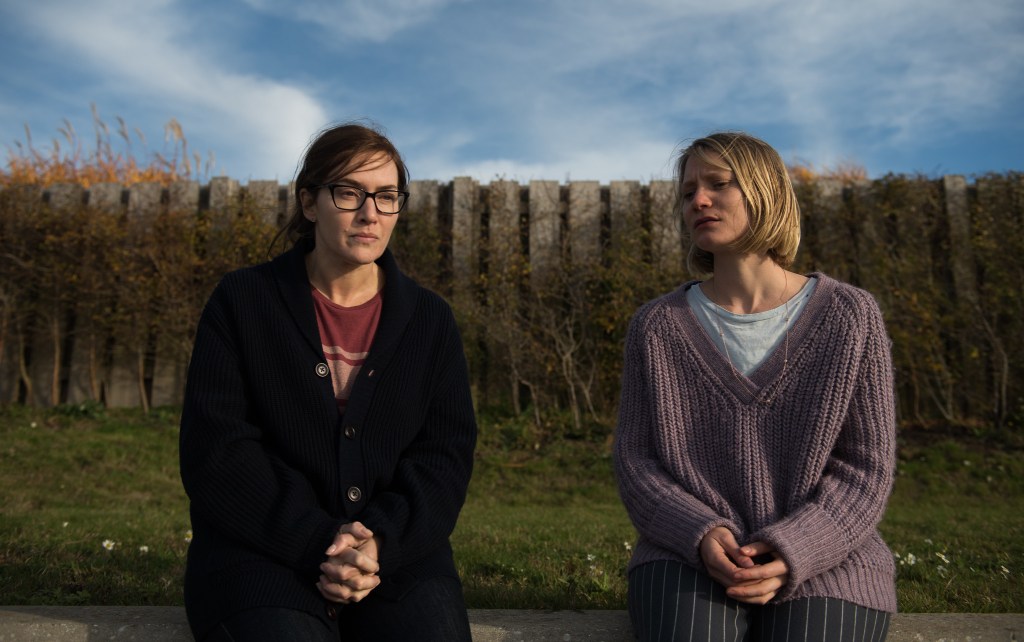
Alas, because the script never goes anywhere unexpected and director Roger Michell shoots with minimal flair it was left to the actors to provide both the pathos and entertainment. Sarandon is commanding and understated playing this woman with a permanent look of resignation and wisdom. Winslet goes into the other direction deciding to give us a CHARACTER. Her imperious and never relaxed older sibling is a mixture of tics and rigid movements. The performance works in fits and starts and she fares better in the many showdowns between the sisters. That’s because Wasikowska is given a sketch of a character. All the cliches of the younger sister; she’s rebellious, lost, deals with substance abuse but all that doesn’t cohere into a recognizable human being stranding Wasikowska in the process.
Winslet and Wasikowska in Blackbird
For a film dealing with such a weighty subject Blackbird is too slight to leave a mark. The script – credited to Christian Torpe – never tries to make any bold statements relying on a quiet slice of life familial narrative. That might be commendable though it also leads to a rather forgettable film.
Misbehavior is grander and more ambitious in its storytelling and thus more affecting. Set at the !970 Miss World competition in London, the film presents its story through the eyes of four real life characters.
Knightley and Buckley at the center
First we have two contrasting views from white women fighting for women’s liberation. Sally Alexander (Keira Knightley) who wants to make change by joining places of male power like academia. Then Jo Robinson (Jessie Buckley) who’s more radical and looking to dismantle all institutions. The contrast is built rather simply as these two women meet and join forces within the same activist group despite opposing tactics. Rebecca Frayn and Gaby Chiappe’s screenplay does not invent the wheel and the scenes where we get to know these two are familiar but also rather engaging.
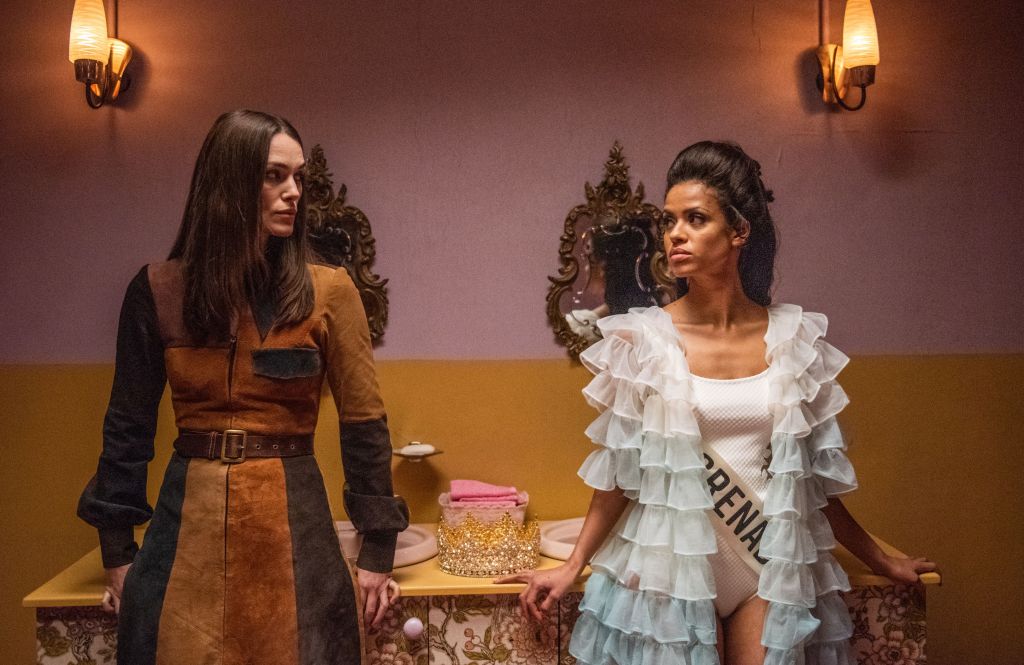
The third and perhaps most interesting point of view is introduced later in the film. Gugu Mbatha Raw plays Miss Grenada Jennifer Hosten who becomes the first Black winner of Miss World. The tension comes from Alexander and Robinson leading a disruption during the ceremony to protest how it objectifies women. Hosten and the first ever Black contestant from South Africa Pearl Janssen (Loreece Harrison) are trying to use the competition as a springboard to more opportunities and to inspire young Black girls everywhere. The best scenes are when the women talk to each other; Janssen and Hosten, Robinson and Alexander and finally Hosten and Alexander. It’s all earnest and heartfelt but the actresses bring a sensitivity and understanding that make these scenes touching. The film tries to balance their views and critique both the exploitation of beauty pageants and the sometimes bird view of white feminism.
Knightley and Mbatha-Raw in Misbehavior
Under prosthetics Gregg Kinnear plays the host Bob Hope presenting the fourth and last point of view. While the filmmakers might have been trying to present the waning world of male entitlement and misogyny with this portrayal it doesn’t add anything insightful to the story. All it does is strand Lesley Manvile in a thankless as his nagging wife, Dolores Hope. I guess they needed to insert a real life famous figure. A more interesting perspective is that of Julia Morley (Keeley Hawes) the wife of the competition’s organizer who recognizes that they must change with the time or become obsolete. I wish the filmmakers beefed up that part instead.
Similar to other small slices of a well known life British movies like last year’s Judy – also with Buckley – Misbehavior is watchable thanks to the charming performances by its leading ladies. Like Blackbird it will be forgotten by next week.
Blackbird is available now in VOD and in select theaters. Misbehavior will be released on September 25.
A new Steve McQueen film is always reason for celebration and especially this one, his sexy and intoxicating swerve into joie de vivre. Lovers Rock which debuted as the opening night film of the New York Film Festival, is part of Steve McQueen’s Small Axe anthology. The series comprises five original films set among London’s West Indian community in the 1970s and 1980s and inspired by stories remembered by McQueen and his family.
Distinctly a McQueen film with its long intense takes and shots that dissolve into one another. Though somewhat of a swerve for him into joie de vivre as these extended dance sequences show the euphoria and camaraderie of life, of people coming together.






 SUNDAYS WITH CATE